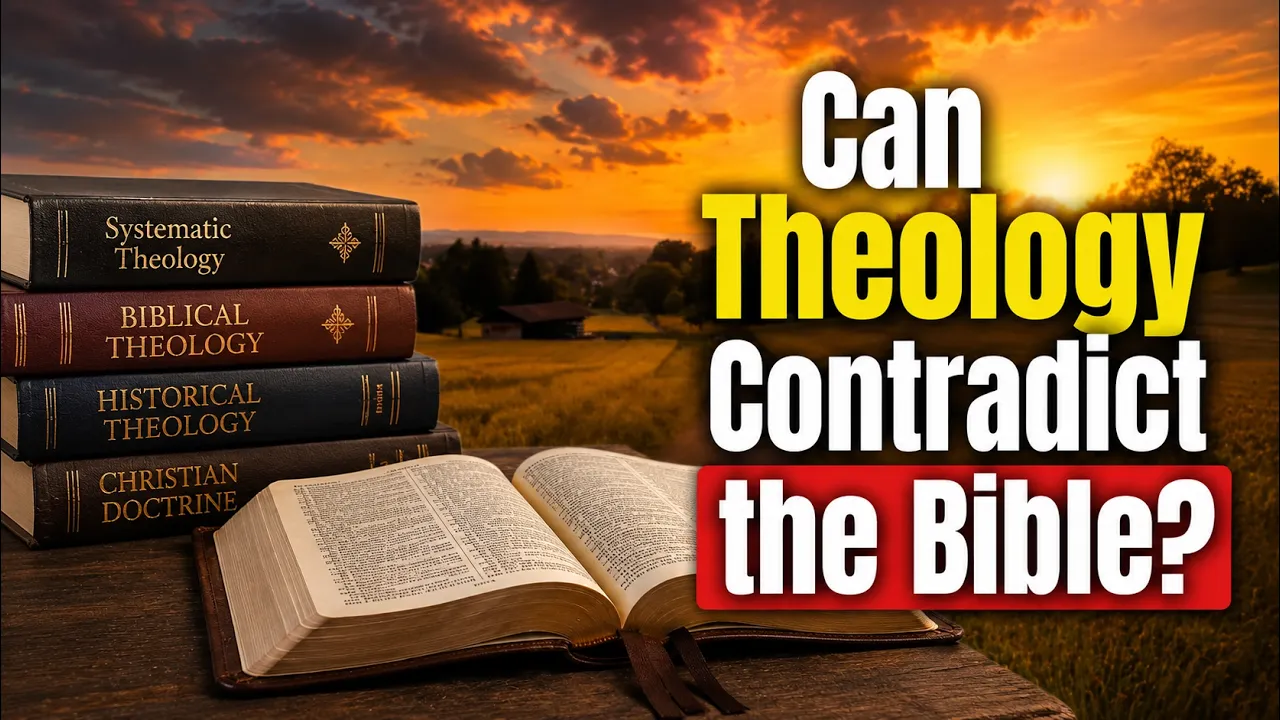
Can Theology Contradict The Bible?
There are two crucial points that every Child of God must consider before we address this question. They need to understand the authentic meaning of theology, and second, they must be sure that their theological tools are accurate for understanding the Bible. Without clarifying these two things, we cannot say whether or not theology contradicts the Bible.
Meaning, Purpose, and Role of Theology
Video T0001 and Article T0001 clearly define theology and explains its role and purpose for Christians. To avoid repeating information, I suggest you click the links, read the article and watch the video before proceeding. In essence, theology enriches biblical understanding by collecting evidence, classifying research, and structuring knowledge for the benefit of all Christians.
There are Many Different Types of Theologies
Theologies serve as tools for extracting spiritual resources from the Bible. The Bible offers a boundless reserve of varied resources. A particular theological framework is necessary to uncover each concealed biblical treasure. Consequently, theologies exist concerning marriage, prosperity, holiness, sanctification, evangelism, and so forth. Using theologies for evangelism to extract resources on marriage is not feasible or profitable. However, all theologies divinely inspired by the Holy Spirit align to create a unified message, with each theology drawing from its own area of expertise. We don’t use copper installations to extract iron, gold, or bauxite. Specific tools and industrial designs are necessary for extracting each resource from the earth. This is also true for the Bible’s content. The misuse of theology to extract treasures from the Bible yields incomplete truths, flawed reasoning, incorrect interpretations, and even heresy in severe instances.
Developing robust theologies that efficiently glean insights from the Bible requires that we consider interpretive tools such as context, the cultural milieu of Bible times, linguistic analysis, and the Holy Spirit’s guidance. The intention of many people is not to misinterpret the Bible. They do not deliberately want to ignore the path to discover the truth. But despite their aim to gain accurate knowledge, their ignorance leads them to accept problematic theological approaches that cause them to err. Others develop theologies to defend their schools of thought or exploit their followers.
Answer to the Question
As we can see, people approach the Bible with diverse motivations, some of which might divert them from the truth. Authentic theologies are divinely designed, receiving inspiration from the Holy Spirit and depending on Him for theological research activities. These theologies are intended to work together, not against each other, to achieve a complete scriptural harmony from beginning to end.
Consequently, theology can conflict with biblical content and create disagreements if it fails to meet the criteria or standards of genuine theology. The origin of many non-authentic theologies lies in bias, subjectivity, and prejudice.
In conclusion, ensure your theologies aim to know God, capture His will, draw from the entire Bible, incorporate both internal and external evidence, and are guided by the most complete school of thought, which is the Holy Spirit. Build your theologies on facts, not on unproven theories, selected scriptures, assumptions, intellectual garbage, and confusing terminologies.
For more information regarding this question, please refer click the video link below:
Ensure the content reaches many in your community.
Stay Blessed in the Lord!