How Should Christians Respond to Conflicting Theological Views?

Regrettably, the world of Christian worldviews and movements is fragmented, with little consensus on numerous theological issues. These disputes have caused many people to form their own groups based on their personal convictions and inspirations. The outcome is that genuine seekers of truth encounter conflicting ideologies, contradictory perspectives, and clear divisions that impede cooperative work and shared research. Article T0009 stated that genuine believers benefit more from identifying as Christians than from pursuing denominational ties. Because many of God’s children are affiliated with certain denominations, your chief goal must be to pursue God’s will wherever you are. To do God’s will within those conflicting denominational factions, we must dedicate ourselves to particular Christian values that ensure we stay fruitful. Here are four rules to help us rise above the unnecessary theological segregation.


Engage in Personal Bible Study

A lot of Christians have developed the habit of substituting the Word of God with their preferred preachers. They no longer want to engage in personal Bible study. However, God’s primary desire is to build a personal relationship with each of His children. While He uses gospel ministers to teach us His will and support our spiritual development, the underlying aim is for us to attain maturity and rely on Him personally for every spiritual and physical need. Since God identifies Himself as the Word (John 1:1), we should treat His Word in the Bible with utmost importance (Psalm 119:105, Psalm 119:37-38, Psalm 119:165).


Trust The Holy Spirit as Your Primary Teacher

We can read the Bible daily, yet we won’t grasp its meaning unless we seek the Holy Spirit’s guidance through meditation. The Bible depicts the Holy Spirit as the guide to all truths (John 16:13). It is not the place of any preacher or teacher to replace the Holy Spirit in the lives of their flock. Should we stop listening to our pastor, preachers, or inspired messages from other Christians? Absolutely not! But by doing so, we understand that they are vessels the Holy Spirit uses to support our spiritual development, discover God’s will, and practice an authentic Christian way of life.


Never Put Your Trust in Humans

It is understood that the word trust can be applied in a wider sense in our regular daily conversations. When we choose not to trust humans, we mean that we should first seek guidance from the Holy Spirit and God’s Word before believing anything from a human source. All gospel preachers around the globe should act as servants of God, not as substitutes for God in the lives of people. Their responsibility is to guide the flock to the Master. They support new converts until it is clear that they have brought them to a stage where self-reliance on God is possible, without acting as barriers to their progress. God doesn’t expect leaders to live the lives of their followers on their behalf. Similar to guiding a newborn from infancy through childhood to adulthood, seasoned Christians in the faith need to help new converts grow spiritually and allow them room to learn from God and follow His guidance themselves (Jeremiah 17:5-8).


If the Bile Doesn’t Say it, Don’t Believe it

It’s not merely a matter of faith but of properly handling the Word of truth. It is essential for all God’s children to do their best in acquiring basic Scripture interpretation skills and to trust the Holy Spirit to aid them in biblical interpretation. Whenever a preacher delivers the Word, we should embrace the Berean mindset and check if what the preacher says is accurate. The Bereans could sift through Paul’s teachings because they primarily trusted the Holy Spirit to guide their understanding of the Scriptures. If you adopt the Berean mentality, no one can trick, manipulate, cheat, exploit, or take advantage of you. In doing so, only God’s genuine revelations will flourish among us.


Furthermore, no individual is higher than the Bible. Are there spiritual matters beyond what the Bible covers? Without a doubt, the answer is yes. Is it our role to seek knowledge of these extra-biblical issues in today’s church era? Not necessarily, since the Holy Spirit gathered what is essential for this era in the Bible we possess. Many more mysteries are reserved for the future age, and when we reach that time, we will perceive things as they truly are. For the time being, we should appreciate what is available to us in the Bible. Moreover, truthfully, a lifetime isn’t sufficient to fully explore the present Bible, and the revelations we gather astonish many. Why should we stress over things we can’t completely understand right now?


By applying these principles in your life, you will readily recognize movements that depend on logical fallacies, those leaning towards religiosity, and those employing mind manipulation techniques to mislead people. Additionally, you will learn to differentiate falsehood from lies and trust the Holy Spirit to reveal an authentic way to accomplish God’s will in your context.

Share this message along to those in your community who wrestle with the connection between the Bible and theology.

Engage in study, conduct research, increase in wisdom, and be blessed in the Lord!



Why Does God Allow Theological Explorations?

Why not just read and stick to only the Bible’s content? What purpose does theological analysis serve? Let’s examine four reasons God permits theological research.


To Extract Spiritual Resources From The Bible

We explain in a different article that theology serves as a research instrument for investigating God, His Word, and His intentions for humanity. God has gifted us the Bible, a profound spiritual treasure trove of resources and promises, to help us lead a unique and purposeful life on this planet. Theological discoveries shed light on Biblical doctrines and premises but don’t take the place of the Bible. Theologies are tools that amass spiritual insights, revelations, and evidence from the Bible.


To Understand God’s Ways

Within the Bible, God conveys a distinct message detailing His purposes for the world, humankind, and our individual lives. God has established principles for how we should live on Earth so that we can be with Him forever. Theological research facilitates a more profound exploration of these subjects, which in turn lead to a clearer comprehension of God’s will. Even without theology, the Bible can stand alone. But sincere theologies inspired by the Holy Spirit allow for continued study and research, drawing from both biblical texts and external resources to enhance our knowledge and relationship with God.

For Organization And Efficiency

You can find the Bible’s treasures dispersed from Genesis all the way to Revelation. We use theologies to extract, sort, and categorize these resources, thereby improving our readiness to engage with non-believers, skeptics, and adherents of other faiths or belief systems. Organized information aids clarity and simplifies Bible study. Consider, for example, the theological efforts of individuals who arrange the Bible thematically for topical study, or those who investigate the authorship, dating, and contextual circumstances of its various Books. All of this information helps us better understand the message God desires to convey.


To Avoid A Boring Life

We are created with the innate drive to understand God, His Word, His plans, the world, and the universe. Additionally, God wants us to exert control over the world and the Satanic kingdom. Theological study allows us to uncover valuable resources, which is great. However, what’s even more beneficial is using those resources with the Holy Spirit’s guidance to enhance our spiritual journeys and transform our communities for Christ.


To further God’s kingdom on earth, spiritual resources are essential. Christians need educational institutions, healthcare facilities, orphanages, diverse professionals, and a wide range of skills and expertise to advance the kingdom’s message. These things keep life exciting and prevent boredom. Imagine toiling ceaselessly like ordinary people, working only for the money to indulge in carnal pleasures. The Ecclesiast labels that as vanity. Engaging in theological exploration helps us lead lives filled with purpose and fulfillment.


These are among the reasons God permits theological explorations. Pass this information along to those who misunderstand theology’s role.


Study, research, grow in wisdom, and stay blessed in the Lord!


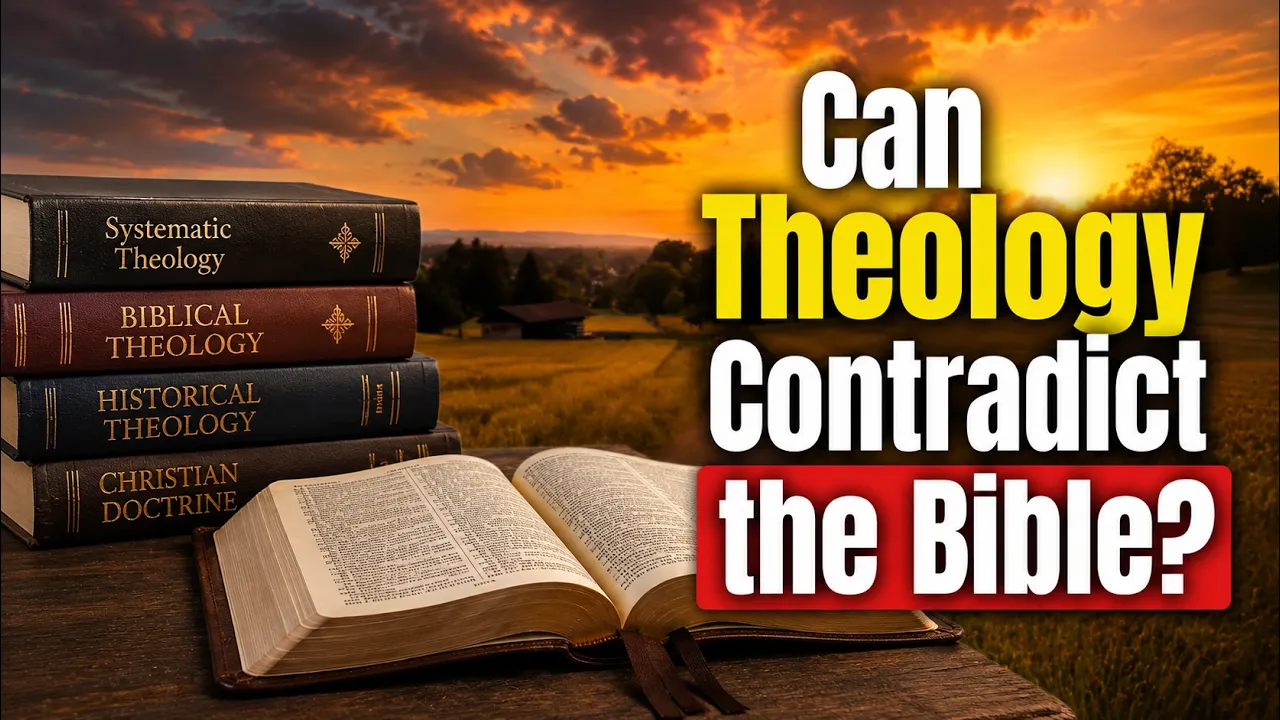
Can Theology Contradict The Bible?

There are two crucial points that every Child of God must consider before we address this question. They need to understand the authentic meaning of theology, and second, they must be sure that their theological tools are accurate for understanding the Bible. Without clarifying these two things, we cannot say whether or not theology contradicts the Bible.


Meaning, Purpose, and Role of Theology

Video T0001 and Article T0001 clearly define theology and explains its role and purpose for Christians. To avoid repeating information, I suggest you click the links, read the article and watch the video before proceeding. In essence, theology enriches biblical understanding by collecting evidence, classifying research, and structuring knowledge for the benefit of all Christians.


There are Many Different Types of Theologies

Theologies serve as tools for extracting spiritual resources from the Bible. The Bible offers a boundless reserve of varied resources. A particular theological framework is necessary to uncover each concealed biblical treasure. Consequently, theologies exist concerning marriage, prosperity, holiness, sanctification, evangelism, and so forth. Using theologies for evangelism to extract resources on marriage is not feasible or profitable. However, all theologies divinely inspired by the Holy Spirit align to create a unified message, with each theology drawing from its own area of expertise. We don’t use copper installations to extract iron, gold, or bauxite. Specific tools and industrial designs are necessary for extracting each resource from the earth. This is also true for the Bible’s content. The misuse of theology to extract treasures from the Bible yields incomplete truths, flawed reasoning, incorrect interpretations, and even heresy in severe instances.


Developing robust theologies that efficiently glean insights from the Bible requires that we consider interpretive tools such as context, the cultural milieu of Bible times, linguistic analysis, and the Holy Spirit’s guidance. The intention of many people is not to misinterpret the Bible. They do not deliberately want to ignore the path to discover the truth. But despite their aim to gain accurate knowledge, their ignorance leads them to accept problematic theological approaches that cause them to err. Others develop theologies to defend their schools of thought or exploit their followers.

Answer to the Question

As we can see, people approach the Bible with diverse motivations, some of which might divert them from the truth. Authentic theologies are divinely designed, receiving inspiration from the Holy Spirit and depending on Him for theological research activities. These theologies are intended to work together, not against each other, to achieve a complete scriptural harmony from beginning to end.


Consequently, theology can conflict with biblical content and create disagreements if it fails to meet the criteria or standards of genuine theology. The origin of many non-authentic theologies lies in bias, subjectivity, and prejudice.


In conclusion, ensure your theologies aim to know God, capture His will, draw from the entire Bible, incorporate both internal and external evidence, and are guided by the most complete school of thought, which is the Holy Spirit. Build your theologies on facts, not on unproven theories, selected scriptures, assumptions, intellectual garbage, and confusing terminologies.


For more information regarding this question, please refer click the video link below:

Ensure the content reaches many in your community.

Stay Blessed in the Lord!