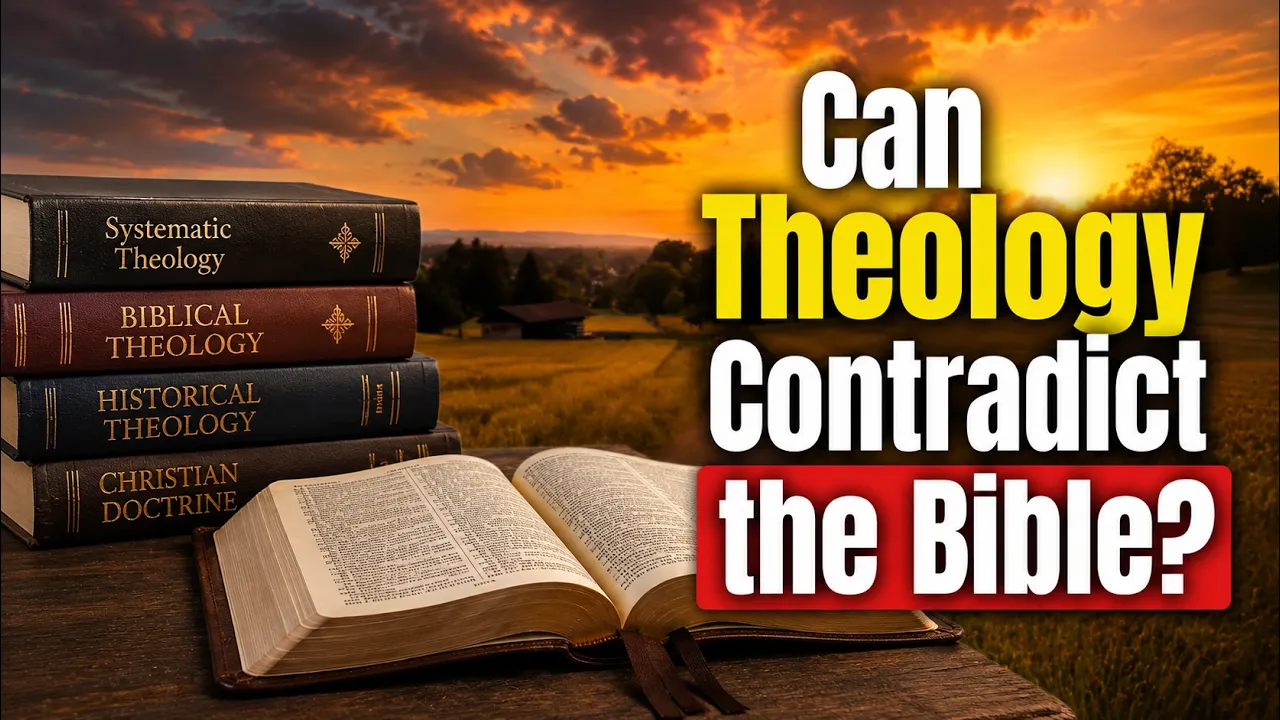
Can Theology Contradict the Bible?
A Biblical Examination
Can theology contradict the Bible? Yes. A theological framework can contradict Scripture when it is built on faulty assumptions, biased interpretations, selective use of biblical passages, or an improper understanding of God’s Word.
Theology is intended to help us explore God, His Word, and His will. However, not every theological approach is reliable. Some frameworks help us understand Scripture more clearly, while others distort its message.
To answer this question properly, we must first understand the purpose of theology, recognize that different theological frameworks exist, and examine what makes a theological approach reliable.
- Understanding the Meaning and Purpose of Theology
Before determining whether theology can contradict the Bible, we must understand what theology is and what it is intended to accomplish.
Theology is a method by which we seek and reason about God, His Word, and His will for humanity. It involves gathering evidence, examining information, organizing knowledge, and seeking to understand biblical truth.
Its purpose should be to enrich our understanding of Scripture rather than replace, undermine, or distort it.
In this regard, theology can serve as a valuable tool for Christians. Through careful theological research, we can explore biblical themes, examine difficult passages, understand doctrines, and discover how different parts of Scripture relate to one another.
However, theology is a tool, and tools can be used correctly or incorrectly.
A theological framework that follows sound interpretive principles can help us understand Scripture. But one that relies on false assumptions, poor reasoning, or an improper use of biblical passages can lead us away from the truth.
For a more detailed explanation, read What Is Theology?
- There Are Different Types of Theologies
The Bible contains many subjects and themes that require careful study. Consequently, Christians develop theological approaches to explore different areas of biblical teaching.
For example, we have theological studies concerning:
- Marriage and family
- Prosperity and stewardship
- Holiness and sanctification
- Evangelism and missions
- Salvation
- The nature of God
- The kingdom of God
- Spiritual gifts
Each theological approach focuses on particular questions and seeks to organize relevant biblical information to help us understand that subject.
Think of theology as a tool for extracting valuable resources. Different tools are designed for different purposes. A tool designed to extract copper may not be suitable for extracting gold or iron. Likewise, a theological framework designed to investigate evangelism may not be the most suitable framework for exploring biblical teachings on marriage.
The problem arises when we use the wrong theological approach, apply it carelessly, or allow it to distort the biblical message.
Do all theological frameworks agree?
Ideally, sound biblical interpretations should not contradict God’s truth. Although different theological studies may focus on different subjects, they should ultimately contribute to a coherent understanding of Scripture.
However, Christians often develop conflicting theological conclusions. These disagreements may arise from differences in interpretation, traditions, assumptions, methods of study, or understanding of particular passages.
Some differences may reflect legitimate disagreements over difficult texts. Others may result from errors in interpretation, incomplete understanding, or a failure to examine Scripture carefully.
Therefore, we should not assume that every theological framework is accurate simply because it uses biblical language or contains Bible verses.
- How Can Theology Contradict the Bible?
Theology can contradict biblical truth when the methods used to develop it fail to respect Scripture’s meaning and context.
Several factors can contribute to this problem.
1. Faulty interpretive methods
The Bible should be interpreted with careful attention to its context, language, historical background, literary structure, and intended message.
When these factors are ignored, people may draw conclusions that the original passage does not support.
For example, a verse may be taken out of its context and used to support a teaching that contradicts the broader message of Scripture.
Paul warns Timothy about those who mishandle the word of truth:
“Rightly dividing the word of truth.” — 2 Timothy 2:15 (KJV)
This instruction highlights the importance of handling God’s Word accurately rather than carelessly.
2. Selective use of Scripture
Some theological frameworks rely heavily on selected Bible verses while neglecting other passages that provide important clarification or balance.
This can lead to incomplete or distorted conclusions.
A sound interpretation should not depend solely on passages that support our preferred position. We must also examine passages that challenge, clarify, or appear to complicate our understanding.
Paul reminds us:
“All scripture is given by inspiration of God, and is profitable for doctrine, for reproof, for correction, for instruction in righteousness.” — 2 Timothy 3:16 (KJV)
We should therefore allow the whole counsel of Scripture to inform our understanding rather than building theology around isolated verses.
3. Bias, assumptions, and prejudice
People often approach the Bible with existing beliefs, traditions, expectations, and assumptions.
There is nothing inherently wrong with asking questions or proposing ideas. The problem occurs when we become unwilling to test those ideas or accept evidence that challenges them.
Instead of seeking truth, some people use biblical passages to defend conclusions they have already decided to believe.
This reverses the proper process of theological inquiry. We should allow Scripture to correct our assumptions rather than forcing Scripture to conform to them.
The Bereans provide a valuable example. Acts 17:11 commends them because they received the message eagerly while examining the Scriptures daily to determine whether what they heard was true.
Their example teaches us to be open-minded, diligent, and willing to examine teachings carefully.
4. Ignoring the guidance of the Holy Spirit
Christians believe that the Holy Spirit helps us understand and apply God’s truth.
Jesus said:
“Howbeit when he, the Spirit of truth, is come, he will guide you into all truth.” — John 16:13 (KJV)
The Holy Spirit’s guidance is essential to our spiritual growth and understanding. We should seek His help through prayer, humility, and faithful study of Scripture.
However, we must also be careful not to claim that every personal impression or interpretation comes from the Holy Spirit.
Our claims of spiritual guidance must be examined against Scripture. Genuine spiritual guidance does not give us permission to disregard the biblical text, ignore context, or elevate our personal opinions above God’s Word.
5. Wrong motives
Not every theological framework is developed with a sincere desire to understand God and His will.
Some people may develop or promote theological ideas to defend a particular institution, preserve traditions, gain influence, manipulate others, or justify personal interests.
Others may be sincere but lack the knowledge and interpretive skills necessary to reach reliable conclusions.
Regardless of the motivation, the result can be teachings that distort Scripture and mislead believers.
Jesus warned against false prophets who appear outwardly trustworthy but are inwardly dangerous (Matthew 7:15–20).
This reminds us that we should examine not only what is taught, but also the evidence and reasoning behind it.
- What Makes Theology Consistent With the Bible?
If theology can contradict Scripture, how can we develop theological frameworks that remain faithful to God’s Word?
We should pursue theology that:
Is centered on understanding God and His truth
The primary purpose of theology should be to understand God, His Word, and His will—not to prove that our preferred theological system is superior.
Examines the entire biblical message
We must consider relevant passages throughout Scripture and avoid constructing conclusions from isolated verses.
Respects context
Every passage should be examined within its literary, historical, cultural, and covenantal context.
We should ask questions such as:
- Who was speaking or writing?
- Who was the original audience?
- What was the purpose of the passage?
- What was happening historically?
- How does the passage relate to the surrounding chapters?
- How does it relate to the wider biblical message?
- How does it apply to us today in light of New Testament teachings?
Uses sound reasoning and evidence
We should distinguish between what Scripture explicitly says, what we reasonably conclude from it, and what remains uncertain.
We should not present assumptions or speculation as established biblical truth.
Remains humble and open to correction
No Christian should assume that their understanding is perfect.
Proverbs 18:17 reminds us that the first account presented may seem convincing until another person examines and questions it.
We should therefore be willing to reconsider our interpretations when presented with stronger biblical evidence.
- Do Genuine Theologies Contradict One Another?
If two theological frameworks genuinely contradict one another on the same question, in the same sense, and under the same conditions, they cannot both be correct.
However, not every apparent disagreement represents a genuine contradiction.
Sometimes Christians are addressing different questions, using different terminology, emphasizing different aspects of a passage, or misunderstanding one another.
In other cases, there may be an actual interpretive error that needs correction.
Our responsibility is not to dismiss every disagreement automatically, but to examine the claims carefully and seek to understand what Scripture teaches.
The goal should be truth—winning souls, not winning arguments, defending denominations, or preserving theological camps.
Conclusion
Theology can contradict the Bible when it is developed through faulty interpretive methods, selective use of Scripture, bias, assumptions, improper reasoning, or wrong motives.
Theology itself is a tool for exploring and understanding God’s Word. Like any tool, its usefulness depends on how it is applied.
We should therefore build our theological understanding on careful biblical examination, sound reasoning, relevant evidence, prayer, humility, and dependence on the Holy Spirit.
Our goal should be to understand Scripture faithfully—not to force Scripture to support our preferred theological framework or school of thought.
Examine what you believe. Test the teachings you receive. Be willing to correct your understanding.
Let God’s Word remain the standard by which your theology is evaluated.
Explore, study, grow in wisdom, and remain blessed in the Lord!
Related Articles
- What Is Theology?
- How Does Theology Differ from the Bible?
- Can Theology Contradict the Bible?
- Why Does God Allow Theological Explorations?
- Why Do Christians Have Conflicting Theologies?
Watch the Video