Why do we Have so Many Christian Worldviews and Denominations?

When you consider how many groups label themselves as Christian, you can be tricked into thinking they all truly are for Jesus. Sadly, many of these groups merely profess a Christian identity with no concrete substance about Christ. Many of these movements oppose one another, despite not having openly acknowledged their rivalry. In this piece, we focus on investigating the reasons for the numerous Christian movements and worldviews.


Many Christians Rely on Poorly Developed Theologies

When the meaning, purpose, and goal of theology in a Christian’s life and the entire Christian community are misunderstood, inevitably, we will base theological development on the incorrect school of thought. Ultimately, the generated theologies will not properly embody God’s will and will completely misguide our Christian journey away from His purpose. All of this leads to confusion, disunity, disagreements, and intellectual pride. This is precisely what we observe among Christians, with their numerous conflicting theologies resulting in countless Christian positions, beliefs, and perspectives all claiming to represent Jesus. The Bible, however, teaches there is one God, one church, one Holy Spirit, one faith, and we should be of one mind (Ephesians 4:1-6, 1 Corinthians 1:13, Romans 12:16, Romans 15:5, 1 Corinthians 1:10, 2 Corinthians 13:11, Philippians 2:2, 1 Peter 3:8). Our present chaos and intellectual arrogance do not fit neatly within God’s design and purpose. The fact that God works through many of us in these chaotic and conflicting movements does not mean He is satisfied with or approves of our present condition.
Many Christians Have Selfish Agendas

What leads some Christian movements to separate from the rest? What thoughts occupy the minds of Christians who choose to follow their own path without seeking joint or collaborative efforts to find the truth? It’s obvious that their agenda does not sufficiently match the gospel of Jesus Christ. If your message doesn’t convey Christ crucified and total commitment to Him, it’s essentially worthless. Sadly, many groups calling themselves Christian are following agendas that stray far from the primary goal of winning souls and making disciples. Some Christian groups focus solely on planting churches without clear guidance from the Holy Spirit to confirm that attendees have genuinely repented and are committed to living for Christ. Others preach a gospel mainly aimed at encouraging their followers to seek comfort and material wealth, overlooking the crucial matter of eternal life with Jesus. What should be said of individuals who, for one reason or another, become involved in compromising faith settings such as cults, occult organizations, and religious groups? As the Ecclesiast notes, God made all these people with good intentions, yet they have pursued unprofitable schemes (Ecclesiastes 7:29).


Most Christians Ignore the Bible’s Call for Unity of the Saints

The Bible urges Christians to live together as a united spiritual community. Through prayer, declaring the Word of God, and mutual support, Christians can move forward collectively without physically coming together. To make this happen, they need to share the same mindset and depend on common fundamental principles. When these fundamental principles are misaligned, everyone heads off in different directions. The Psalmist explicitly asks, “If the foundations are destroyed, what can the righteous do?” (Psalm 11:3 NKJV). Many groups that identify as Christians and claim to represent Jesus fail to base their beliefs on sincerely Holy Spirit-inspired Christian principles and doctrines. They carry a load of intellectual knowledge, combined with excellent communication techniques and tools available today, yet lack the authority to transform lives. Depending on an incorrect foundation and declining to participate in joint research efforts leads to everyone going their separate ways.


Many Christian Movements are Self-Centered

The Early Church’s remarkable achievements, illustrated in the Book of Acts, stem from their wholly selfless way of life, as portrayed in Acts 4:32-34. In Paul’s letters to the churches, he consistently urges congregations to pray for one another and for Christians in different communities or regions to offer mutual support through prayer. Nowadays, we have groups of people who believe they know everything. Driven by pride, they come before God with selfish requests focused on their personal and self-centered desires. Some aim to become mega-churches, while others focus on constructing massive buildings without carefully addressing the spiritual and physical needs of their followers. In recent decades, there has been a rise in ungodly trends marked by individual Christians seeking fame and popularity at the expense of virtues and Christian morals. Each of these factors has played a role in forming Christian factions worldwide that disagree and fail to build God’s kingdom effectively.


Helpful Questions

How much honor and glory does your movement bring to Jesus? In what way does your organization connect with others? Have you engaged in collaborative research efforts concerning matters you disagree with others? In what ways do the presuppositions of your church or movement align with the Bible’s call for unity among the saints? Is your focus on God’s will, your personal agenda, or self-driven initiatives?

Share this information with members of your community who find the relationship between the Bible and theology challenging.

Study and delve into the Word of God, gain wisdom, and remain blessed in the Lord!
 

What Makes Biblical Interpretation Reliable? Part 1

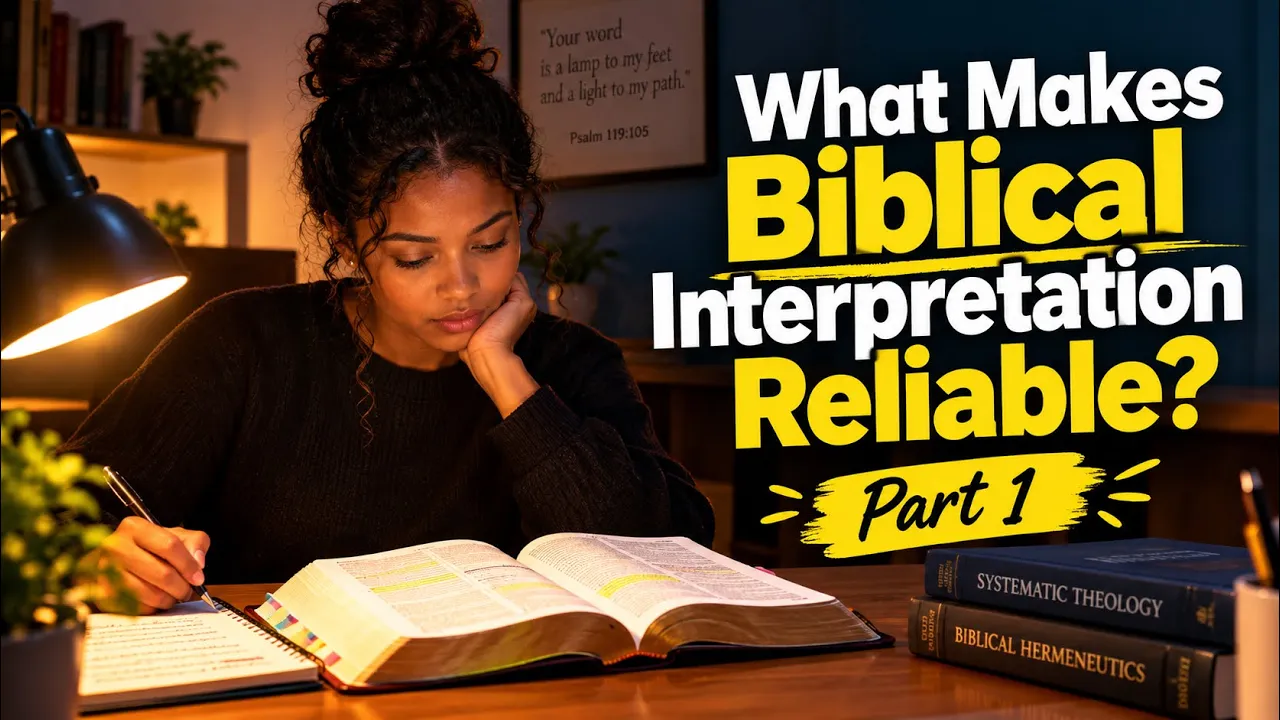
For many people, including some Christians, interpreting the Bible is a major challenge. The reason is that certain interpretation protocols must be respected; failing to do so makes the interpretation unreliable. Let’s explore some key points to keep in mind when interpreting the Bible.


The Holy Spirit Guides

Simply put, arriving at an accurate interpretation of the Bible is impossible without the Holy Spirit’s guidance. John 16:13 teaches us that He leads us into all truths, in accord with the Father’s will. Without the Holy Spirit, biblical interpretation is devoid of meaningful spiritual backing. This is why unbelievers cannot provide a trustworthy interpretation of Scriptures, as spiritual discernment by the Holy Spirit matters. Moreover, when the Holy Spirit directs our interpretation of Scriptures, the outcome consistently aligns with that of Christians worldwide. Interpretations of the Bible that conflict and contradict are not from Him.


Understand The Difference Between the Logos and Rhema

The Ecclesiast was quite correct in saying God created man upright, yet we have pursued other schemes. This holds true regarding how we have swapped the use of Logos and Rhemas in our Christian lives. Everything written in the Bible represents the Logos, the written word of God. Rhemas are the inspirations that come from the written Word or Logos.


The written Word or Logos conveys a specific message that remains unchanged. That message was created within a particular context, sometimes intended only for certain people, and plays a distinct role in completing the Bible’s unique message – life, crucifixion, death, and resurrection of Jesus. When recording the Logos, the writers had a particular meaning and message in mind for a specific audience that points to the Cross.


Bear in mind that theological research and discoveries aid greatly here by generating evidence to grasp that message. The meaning or intention in the Logos remains constant over time. Christian denominations and worldviews frequently find it difficult to grasp the true meaning of various parts of the Logos. The Book of Revelations serves as a good example, with some interpreting it literally and others allegorically, resulting in conflicting and contradictory views. Misunderstanding the meaning of the Logos makes it hard and complex to produce reliable Rhemas from it.


A single verse of the Logos can spark hundreds of Rhemas. Rhemas are distinct because they are tailored to an individual or group seeking guidance from God and pertain to a particular situation. For example, the apostles heal a man at the temple gate known as Beautiful. When reading that Logos, one receives a healing technique or ministry, while another feels inspired to establish a humanitarian organization. Someone pays attention to the paralytic’s faith, whereas another person is interested in the belief that God heals even now. Through meditation, Christians worldwide can produce hundreds of Rhemas from that one passage across different contexts. Yet the true meaning of the verse is that the Apostles healed a man before entering the temple.


As theology depends on the Bible to guide theological research, trying to produce Rhemas from any source other than the properly interpreted biblical Logos is witchcraft and superstition.


Context

Context is the next element to consider when interpreting the Logos. What was the purpose behind writing the Scripture? For whom was it written? Where did it get written? Is it about the Old or New Covenant? How is it relevant to us nowadays? These and numerous other questions assist us in contextualizing the Bible passage so we can firstly determine its precise meaning, and subsequently produce authentic Rhemas from that meaning.


Numerous preachers nowadays extract Rhemas from their context and apply them indiscriminately without clearly distinguishing between different contexts. Also Some Christians pick and apply certain Old Testament Scriptures in the New Testament context without considering the meaning of the message in both covenants? Also, although many still cling to the “eye for an eye” mindset or eagerly pursue revenge when wronged, we are now in a distinct context that demands loving our enemies, praying for them, and striving to lead them to Christ.


To conclude this first section, we need to differentiate between studying the Bible and meditating on Scriptures to grasp the intended message of the writer, allowing the Bible to interpret itself, and meditating on that meaning to obtain specific Rhemas or revelations that provide guidance or solutions tailored to our unique context in our time.


Be sure to read Part 2 to gain a full understanding of what makes biblical interpretation reliable.


Share this content with those in your community who have difficulty understanding the relationship between the Bible and theology.


Explore, study, grow in wisdom, and remain blessed in the Lord!
 

Click here To Read Part 2


What Is Theology?

This question is one of the most crucial a Christian must address in their life. Failing to answer this question could affect your spiritual journey, divine purpose, and even your eternal fate. Stanford E. Murrell, Th.D. says, “Every thoughtful individual is a theologian to some extent, for life and destiny are affected by what an individual believes about God and His will.” Because your beliefs about God have eternal consequences and theology is fundamental, you must research theology’s true meaning.


Let’s begin by exploring what theology is not, before we define it.

First, theology is not the same as the Bible. When many people hear the term “theology,” their first thought is the Bible. Given that theology is the method for analyzing life’s issues, every person or group generates theologies to explain life’s matters. Evolutionists, atheists, agnostics, Muslims, traditionalists, and scientists, among others, all follow specific theologies that shape their worldviews and thought processes. Other people are of the opinion that scholars attending theological institutions possess a genuine understanding of the Bible. But even after attending Bible college for years, many still misunderstand or misinterpret the Bible’s core message.

Second, theology and doctrine are not the same thing. With the rise of countless worldviews and theological schools of thought, many Christians worldwide find it challenging to distinguish between doctrine and theology (we explain the difference in another article). Therefore, many find themselves within contentious theological groups, holding the conviction that their interpretation of the Bible is the right one.

Now that we have established these two points, we can define theology.


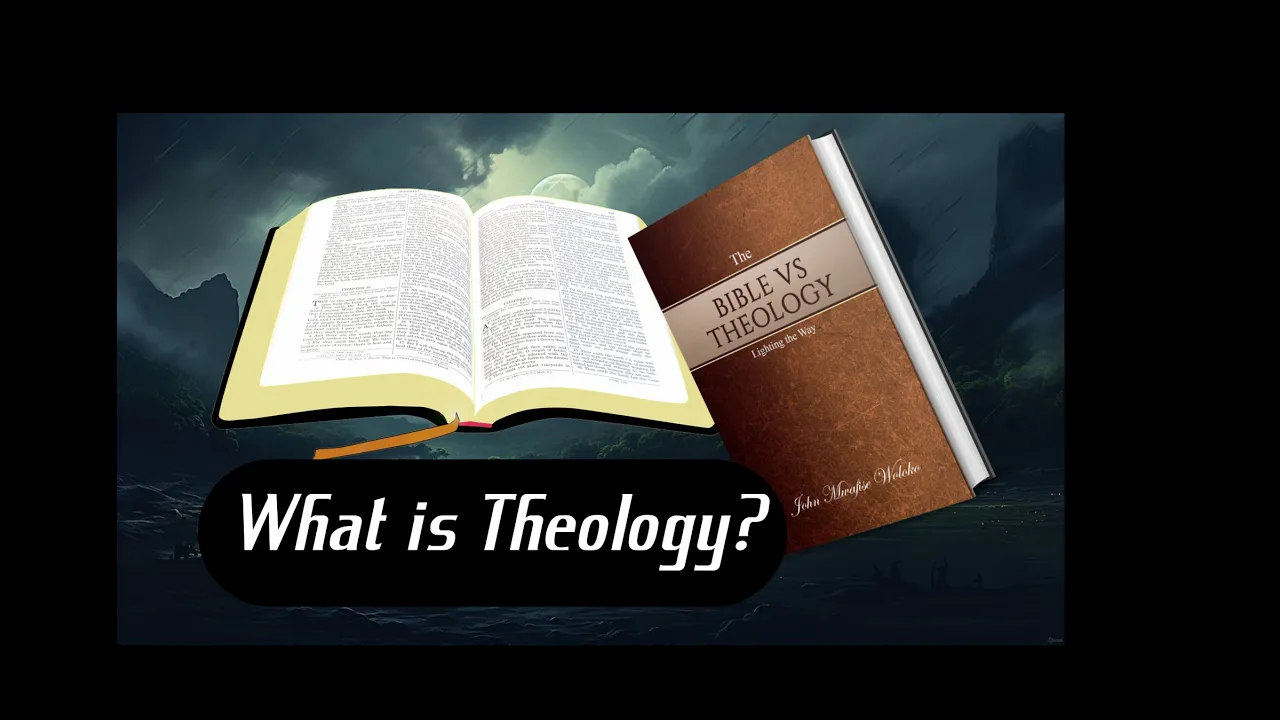
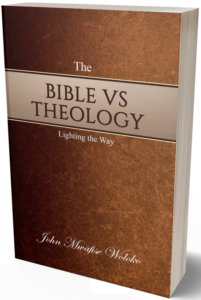
This is how I define theology in the book ‘The Bible Vs Theology.’ A ‘‘method by which we seek and reason about God, His word and His will for humankind, organizing information and gathering evidence to understand Him better.’’


This definition brings a few things to light regarding theology:

  • Theology is only a research tool to help Christians explore God, the Bible, and His will.

  • Theology serves as the Christian method for compiling, defining, categorizing, and organizing insights about God and His intentions for humanity.

  • The Bible is a treasure chest, and theologies allow us to explore and extract its valuable, hidden resources.

  • Each theology will only extract the resources for which it was developed.


The book, The Bible Vs Theology is a resource packed with information on the Bible and theology, accessible through various online retailers and bookshops. It clearly illustrates the distinction between the Bible and theology. It also demonstrates how people can employ theological frameworks to derive insights from the Bible.

Stay Blessed in the Lord!