Why Do Christians Have Conflicting Theologies?
Upon careful examination of the Christian cycle, you will find multiple movements that call themselves Christian. You’ll find Christian factions broken into worldviews, denominations, cults, different schools of thought, occult beliefs, and many other groups, all of which profess to represent Jesus.
For instance, some Christian worldviews embrace free will, but others reject it entirely. Some believe in eternal separation from God in hell, while others think there is no hell, or that God will simply destroy all non-believers, a concept known as annihilation. A few Christian groups believe in universal salvation and reconciliation with God; some embrace reincarnation. One faction adheres to the Baptism of the Holy Spirit, while another rejects it. Some say miracles are a thing of the past; others believe Jesus is the same throughout time. We cannot examine every movement claiming to represent Christ in this article.
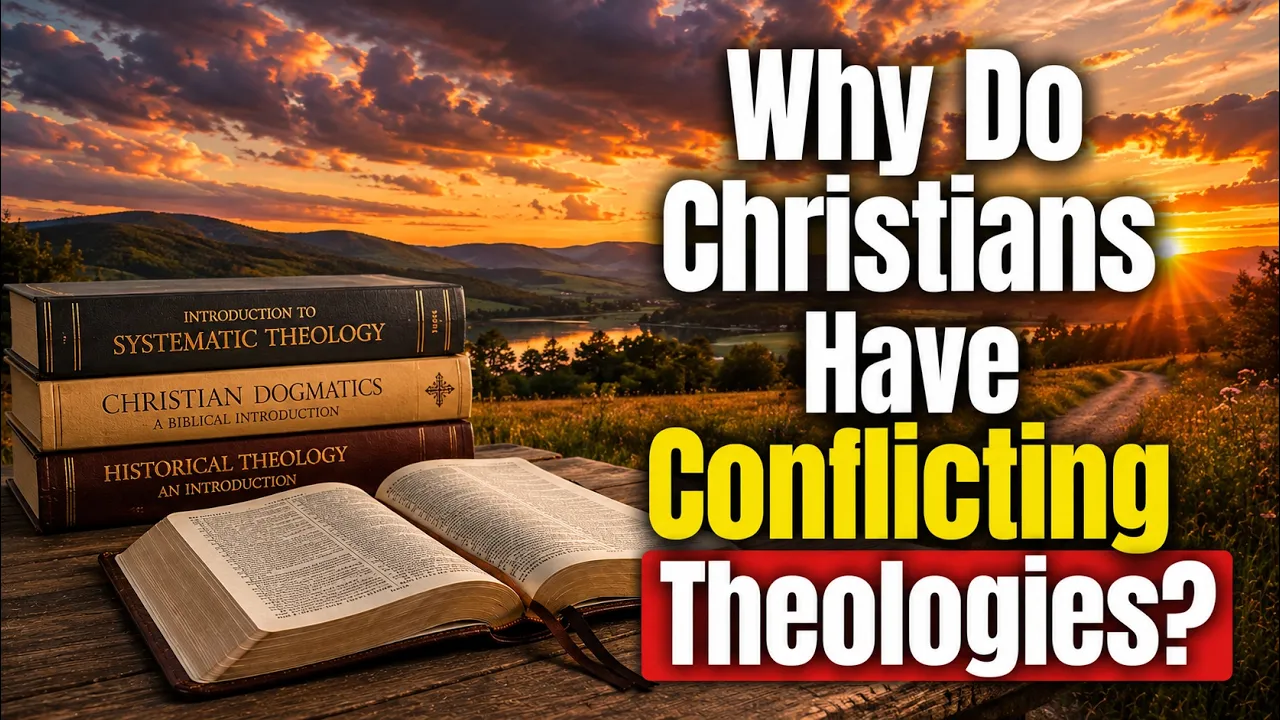
Why do two people who identify as Christians, despite reading the Bible, which is divinely inspired, reach opposing conclusions leading to arguments, confusion, and irreconcilable conflicts? Here are nine of the many reasons this occurs:
- They substitute the Bible with their theologies. When Christians fail to grasp theology’s true meaning, purpose, and role, this occurs.
- They prioritize theology over God’s Word. Actually, some people mistakenly believe that a theological explanation is equivalent to God’s Word in the Bible. Theologies simply provide supporting evidence to help us teach and explain the Bible’s message clearly.
- They base their theologies on selected Scriptures. The Bible’s message, from Genesis to Revelation, is consistent, displaying a clear, harmonious progression from the Old Testament to the New. When you select Scriptures, you don’t rely on the entire Bible. Using only a fragment of scripture will lead to insufficient conclusions.

- They develop their theologies to defend their school of thought. Your school of thought is how you build your understanding of biblical doctrines. Some schools of thought are founded on unproven assumptions. For instance, some Christian factions believe the age of miracles has ceased. Others don’t believe God can condemn individuals to eternal damnation. Their theological frameworks are constructed to uphold their existing assumptions, rather than to genuinely grasp and proclaim the true Gospel.
- They approach the Bible with bias, subjectivity, and prejudice. For instance, some people approach the Bible with the notion that it is corrupt, incomplete, or full of errors. Some claim it was human-inspired and suggest salvation can be achieved through various paths. If you refuse to let the Scriptures challenge your traditions, lifestyle, knowledge, or prior knowledge, you risk creating theologies that resist God’s will.
- They want to keep their human traditions. That your movement’s founder passed down certain Christian traditions through the generations does not validate them as genuine truth. Such Christian milieus prefer religiosity over genuine New Testament revelations. This is how the Pharisees and Sadducees behaved when Jesus walked the earth.
- They don’t rely on the Holy Spirit. It is abundantly clear in the Bible that the Holy Spirit is necessary in the Christian’s life to achieve anything or do God’s will. Not all theologies originate from the Holy Spirit; some are simply human constructs. The Holy Spirit is the source of diversity, not of division. He ensures that two sincere Christians do not disagree on doctrine.
- They don’t allow the Bible to interpret itself. The Bible can stand on its own, even without theological interpretations. A Christian will still live a wonderful life by solely reading the Bible, meditating on the Word, and acting according to its teachings. Theology adds a unique dimension by providing explanations and addressing the fundamental questions of existence with internal and external evidence.
- They rely solely on theories, assumptions, speculations, and suggestions. These are vital for theological research, as long as the researcher is prepared to concede their position if evidence is lacking. Intellectual pride is our current challenge, spawning numerous intellectuals unwilling to abandon their unproven theories because of the prestige, societal position, or benefits they enjoy.
While many other factors contribute to theological disagreements among Christians, these provide a starting framework for deeper investigation.
Ensure this information reaches others caught in unhealthy theological patterns.
Study, research, grow in wisdom, and stay blessed in the Lord!