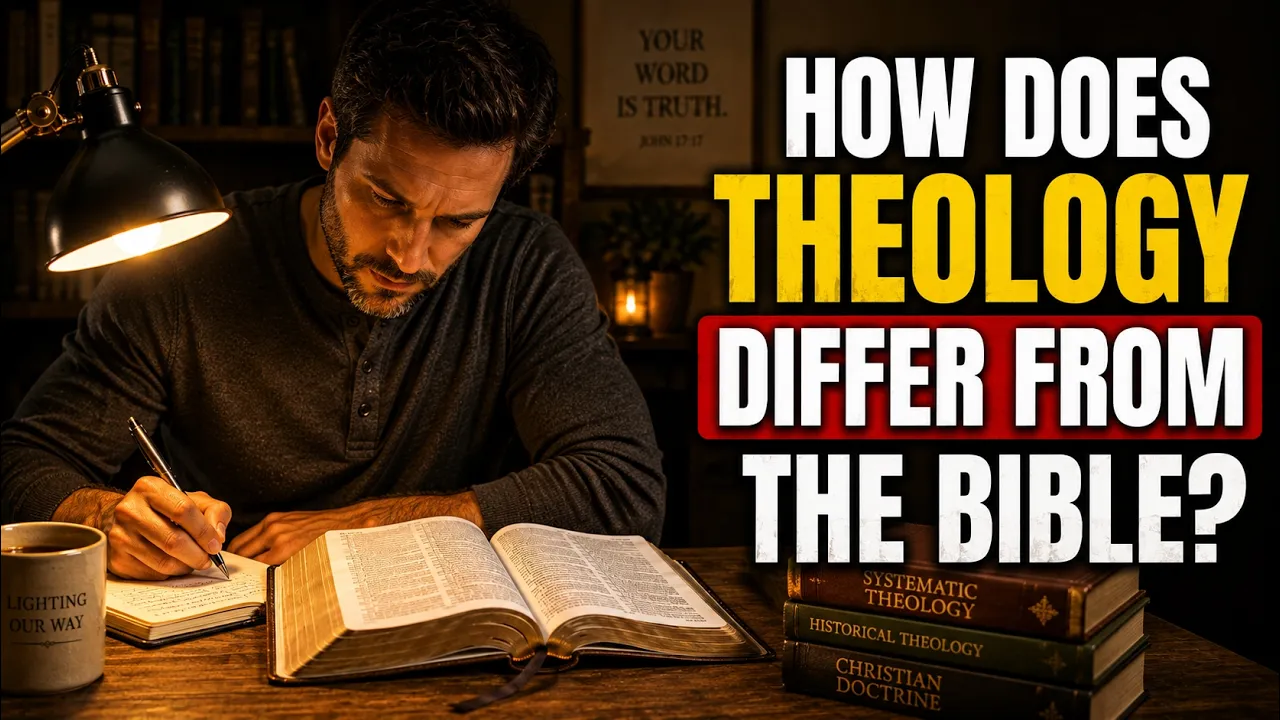
How Does Theology Differ from the Bible?
Understanding the Difference
The Bible and theology are closely related, but they are not the same thing. The Bible is the sacred text containing God’s revelation, while theology is a method through which we seek to understand, interpret, organize, and reason about God, His Word, and His will.
Understanding this distinction is important because Christians sometimes confuse their theological beliefs and interpretations with the Bible itself. As a result, they may defend their theology as though it were infallible, even when their interpretations are mistaken.
So, how does theology differ from the Bible? Let us examine the distinction and why it matters for our understanding of God’s truth.
1. The Bible Is God’s Word, While Theology Is a Method of Understanding It
The Bible occupies a unique position in the Christian faith. Christians believe it is inspired by God and serves as the foundation for understanding His revelation, His purposes, and His will.
Paul writes:
“All scripture is given by inspiration of God, and is profitable for doctrine, for reproof, for correction, for instruction in righteousness.” — 2 Timothy 3:16 (KJV)
The Bible provides the foundation upon which our understanding of God should be built.
Theology, however, is a method of studying and reasoning about God and biblical revelation. It involves examining passages, gathering information, interpreting teachings, comparing ideas, and drawing conclusions.
For example, when someone studies what the Bible teaches about salvation, the nature of God, prayer, marriage, or the kingdom of God, they are engaging in theological study.
The Bible is the source of revelation being examined, while theology is the process through which that revelation is explored and understood.
This distinction helps us recognize that the Bible and our theological interpretations do not possess the same authority.
2. The Bible Is the Standard, While Theology Must Be Examined
One of the most important differences between theology and the Bible is their authority.
The Bible serves as the standard against which our theological interpretations should be evaluated.
Theology is developed through human reasoning, interpretation, investigation, and organization of biblical information and collected evidences. Therefore, theological conclusions can be accurate or inaccurate.
Even sincere Christians can misunderstand Scripture, overlook important details, make incorrect assumptions, or draw conclusions that the biblical evidence does not support.
This is why we should not treat our theological frameworks as unquestionable.
The Bereans provide a valuable example in Acts 17:11. They received Paul’s message eagerly, but they also examined the Scriptures daily to determine whether what they were being taught was true.
Their example demonstrates the importance of examining teachings through Scripture rather than accepting them merely because they come from a respected teacher.
Our theology should be continually evaluated, corrected, and refined through careful examination of God’s Word.
3. The Bible Contains God’s Revelation, While Theology Organizes Our Understanding
The Bible contains a wide range of information about God, humanity, creation, sin, salvation, morality, spiritual life, and God’s purposes.
However, biblical information is not always presented in the systematic categories we use today.
For example, the Bible discusses the nature of God across many Books, passages, historical events, teachings, and revelations.
When theologians study these passages, they gather related information, compare the evidence, and organize their conclusions into a framework that helps explain what Scripture teaches about God.
This is one of the functions of theology.
Theological frameworks help us organize biblical information into subjects and categories, making it easier to investigate particular questions and understand relationships between different teachings.
For instance, systematic theology may organize biblical teachings into subjects such as:
- Theology proper — the study of God.
- Christology — the study of Jesus Christ.
- Pneumatology — the study of the Holy Spirit.
- Soteriology — the study of salvation.
- Ecclesiology — the study of the church.
- Eschatology — the study of last things.
These categories are tools for organizing and examining biblical teachings. They are not themselves the Bible.
4. The Bible Is Inspired, but Theological Interpretations Can Be Mistaken
The Bible is regarded by Christians as inspired by God. However, our interpretations of the Bible are not always inspired by the Holy Spirit.
We may misunderstand a passage because of inadequate knowledge, cultural assumptions, language difficulties, personal biases, poor interpretive methods, or a failure to consider the context.
Consequently, two people may study the same passage and arrive at different conclusions.
One interpretation may be more faithful to the passage than the other, or both may contain errors.
This is why it is important to distinguish between the biblical text itself and what we believe the text means.
For example, when someone says, “The Bible teaches this,” it is worth examining whether the passage actually teaches that conclusion or whether the person is presenting their interpretation of the passage.
This does not mean that we cannot understand Scripture. Rather, it means that we should approach biblical interpretation with humility, diligence, and a willingness to be corrected.
Paul instructed Timothy:
“Study to shew thyself approved unto God, a workman that needeth not to be ashamed, rightly dividing the word of truth.” — 2 Timothy 2:15 (KJV)
We must strive to handle God’s Word accurately.
5. The Bible Does not Contradict Itself, but Theologies Can Differ
Christians have one Bible, yet they often develop different theological frameworks to explain its content.
These differences can arise because people interpret passages differently, emphasize different biblical themes, use different methods of study, inherit different traditions, or approach Scripture with different assumptions.
For example, believers may develop differing theological views about:
- Predestination and free will.
- The continuation of spiritual gifts.
- Baptism.
- The relationship between faith and works.
- The nature of the church.
- The end times.
- The possibility of losing salvation.
These disagreements illustrate why theology should not be confused with the Bible.
The existence of different theological positions does not mean the Bible itself contains contradictory truths. Rather, it demonstrates that people can develop different interpretations of the same biblical text.
Some interpretations may be more accurate than others, and some disagreements may involve issues that Christians have not fully resolved.
We must therefore examine the biblical evidence carefully instead of assuming that our theological position is automatically correct.
6. Theology Should Help Us Understand the Bible, Not Replace It
The purpose of theology should be to help us understand God’s Word more accurately.
It should encourage careful study, deeper understanding, sound reasoning, and a clearer appreciation of biblical truth.
However, theology becomes problematic when people allow their theological frameworks to control how they interpret Scripture, rather than allowing Scripture to shape and correct their theology.
When this happens, individuals may begin defending their theological systems instead of pursuing the truth.
They may reject passages that challenge their beliefs, reinterpret clear teachings to fit their framework, or rely heavily on their theological traditions without adequately examining the biblical evidence.
Jesus warned about the danger of elevating human traditions above God’s commandments in Mark 7:6–13.
This principle reminds us that human religious systems must never be allowed to undermine the authority of God’s Word.
We should use theology as a tool for understanding Scripture while remaining willing to correct our theological conclusions whenever the biblical evidence demands it.
7. Why Understanding This Difference Matters
Understanding the distinction between theology and the Bible can help us develop a healthier approach to Christian learning and spiritual growth.
It helps us avoid theological pride
We should not assume that our theological knowledge makes us superior to other believers.
Knowledge should lead us toward humility, wisdom, love, and a deeper understanding of God.
It encourages independent biblical examination
We should not depend entirely on pastors, theologians, books, commentaries, or denominations to tell us what the Bible means.
These resources can be valuable, but we should also examine Scripture ourselves, as the Bereans did in Acts 17:11.
It helps us recognize theological errors
When we understand that theology involves human reasoning, we become more willing to examine theological claims rather than blindly accepting them.
It promotes Christian growth
A willingness to revisit our beliefs and examine Scripture carefully can help us grow in understanding and maturity.
Instead of becoming trapped in rigid theological systems, we can remain committed to learning, correcting our mistakes, and pursuing biblical truth.
Conclusion
The Bible and theology are closely connected, but they are fundamentally different.
The Bible is God’s inspired revelation, while theology is a method through which we seek to understand, interpret, organize, and reason about that revelation.
The Bible is the standard by which our theological conclusions should be evaluated. Theology, therefore, should never be elevated above Scripture or treated as infallible.
Our responsibility is to study God’s Word carefully, examine our theological beliefs honestly, remain humble, and allow Scripture to correct our understanding.
The goal is not merely to develop a theology that we can defend, but to understand God’s truth faithfully and grow in our relationship with Him.
Stay blessed in the Lord!
Related Articles
- What Is Theology?
- How Does Theology Differ from the Bible?
- Can Theology Contradict the Bible?
- Why Does God Allow Theological Explorations?
- Why Do Christians Have Conflicting Theologies?
Watch the Video