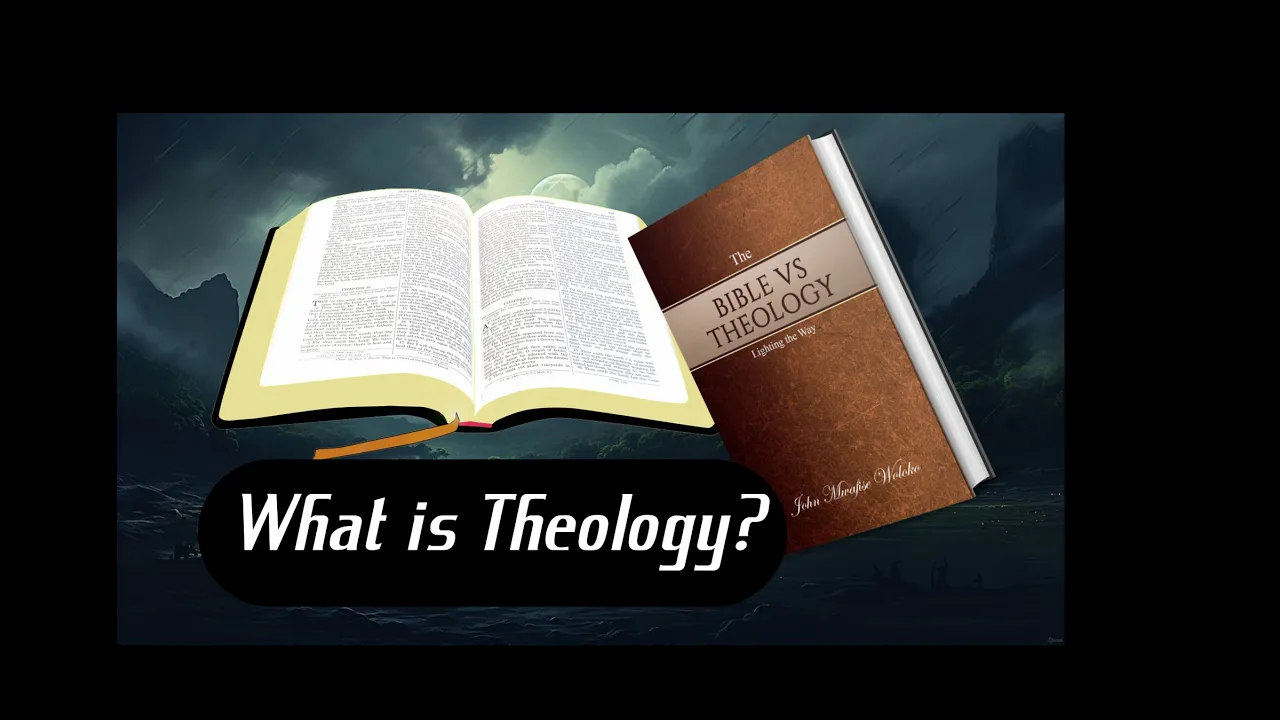
What Is Theology?
Meaning, Purpose, and How It Differs from the Bible
The question “What is theology?” is one of the most important questions a Christian should consider. Our understanding of God, His Word, and His will influences how we live, how we interpret Scripture, how we make decisions, and how we understand our spiritual journey.
Failing to understand theology can lead us to confuse or interchange human interpretations with biblical truth. It can also affect our understanding of God’s purpose and the way we relate to Him.
Stanford E. Murrell, Th.D., expresses the importance of this subject by observing:
“Every thoughtful individual is a theologian to some extent, for life and destiny are affected by what an individual believes about God and His will.”
Because our beliefs about God have profound consequences, we should take the time to investigate the true meaning of theology.
Before defining theology, however, let us first examine what theology is not.
- Theology Is Not the Same as the Bible
When many people hear the word theology, they immediately think of the Bible. Although theology often draws its understanding from the Bible, the two are not identical.
The Bible is the sacred text through which Christians receive and examine God’s revelation. Theology, on the other hand, involves the process of reasoning, interpreting, organizing, and drawing conclusions about God, His Word, and His will.
People develop theological ideas and frameworks to explain their understanding of God, existence, morality, humanity, and the purpose of life. These frameworks are influenced by their beliefs, assumptions, experiences, traditions, and methods of reasoning.
Consequently, people from different religious, philosophical, and ideological backgrounds develop different understandings of reality. Atheists, agnostics, Muslims, Christians, traditionalists, and others may hold different views about God, existence, and humanity’s purpose.
These perspectives influence how they interpret life and make sense of the world around them.
Therefore, theology should not automatically be equated with the Bible. A theological framework may be based on Scripture, but it may also contain human assumptions, misinterpretations, baseless traditions, or errors.
Even individuals who have studied theology at universities, seminaries, or Bible colleges for many years may misunderstand or misinterpret important biblical teachings. Academic qualifications alone do not guarantee that someone’s interpretation is accurate.
The important question is not merely whether someone has studied theology, but whether their theological conclusions are consistent with the truth.
- Theology Is Not the Same as Doctrine
Another important distinction is the difference between theology and doctrine.
With the existence of countless worldviews, theological systems, and Christian traditions, many believers struggle to distinguish between these two concepts.
Although theology and doctrine are closely related, they are not identical. Theology involves the process of exploring, reasoning about, and organizing our understanding of God and His Word. Doctrine refers to teachings, beliefs, or principles developed and held within a particular belief system.
Theological reasoning may lead people to formulate doctrines, interpret biblical passages, and establish particular beliefs.
However, different theological approaches may produce different doctrinal conclusions. This is one reason Christians sometimes find themselves divided into theological camps, each believing that its interpretation of Scripture is correct.
Understanding the distinction between theology and doctrine can help us examine our beliefs more carefully instead of assuming that every theological position represents the Bible accurately.
We explore this distinction further in our article on the difference between theology and doctrine.
- What Is Theology? A Definition
Now that we have established that theology is neither the Bible itself nor identical to doctrine, we can define theology.
In my book The Bible Vs Theology, I define theology as:
“A method by which we seek and reason about God, His word and His will for humankind, organizing information and gathering evidence to understand Him better.”
This definition highlights several important aspects of theology.
Theology is a method of exploration
Theology is a tool we use to explore questions concerning God, His Word, His nature, His purposes, and His will for humanity.
It involves asking questions, examining evidence, reasoning through information, and seeking a deeper understanding.
Theology helps us organize knowledge
As we study Scripture and explore questions about God, we encounter many ideas, teachings, principles, doctrines, and interpretations.
Theology helps us compile, define, categorize, and organize this information so that we can better understand and apply them.
Theology helps us discover insights (Treasures)
The Bible contains a wealth of wisdom, doctrines for life, knowledge, instruction, and spiritual truth. All these spiritual resources are treasures.
Through careful study, interpretation, reasoning, and investigation, we seek to understand these truths and discover insights that help us comprehend God’s Word and His intentions for us.
Different theologies may emphasize different things
Theological frameworks are developed to explore particular questions, themes, or aspects of God’s revelation.
As a result, different theologies may emphasize different biblical passages, principles, themes, or conclusions.
This does not mean that every theological framework is equally accurate or that all interpretations are equally valid. Rather, it highlights the importance of examining the methods and conclusions of our theological explorations against Scripture.
- The Bible and Theology: Understanding Their Relationship
The Bible can be compared to a treasure chest filled with valuable resources. Theology serves as a tool through which we explore that treasure, examine its contents, and seek to understand the riches contained within it.
The Bible is the source of biblical revelation, while theology is a method of exploring and interpreting that revelation.
However, the theological framework we use can influence what we notice, how we interpret particular passages, and which conclusions we draw.
This is why we must be careful not to allow our theological systems to become more authoritative than Scripture itself.
Our goal should not be to force the Bible to agree with our theology. Instead, we should continually examine our theology in light of the Bible, remaining willing to correct our understanding whenever necessary.
A theology that is genuinely seeking biblical truth should encourage us to examine Scripture carefully, recognize our limitations, and remain open to correction.
Conclusion
Theology is a method by which we seek, reason about, investigate, and organize our understanding of God, His Word, and His will for humanity.
It is not the Bible itself, nor is it identical to doctrine. Rather, it is a tool that helps us explore biblical revelation, develop understanding, and examine the beliefs we hold.
Because our theological frameworks influence how we understand Scripture, we must continually evaluate them rather than blindly defend them.
The ultimate goal is not to become attached to a theological system, but to pursue a better understanding of God and His truth.
Stay blessed in the Lord!
Related Articles
- What Is Theology?
- How Does Theology Differ from the Bible?
- Can Theology Contradict the Bible?
- Why Does God Allow Theological Explorations?
- Why Do Christians Have Conflicting Theologies?
Watch the Video