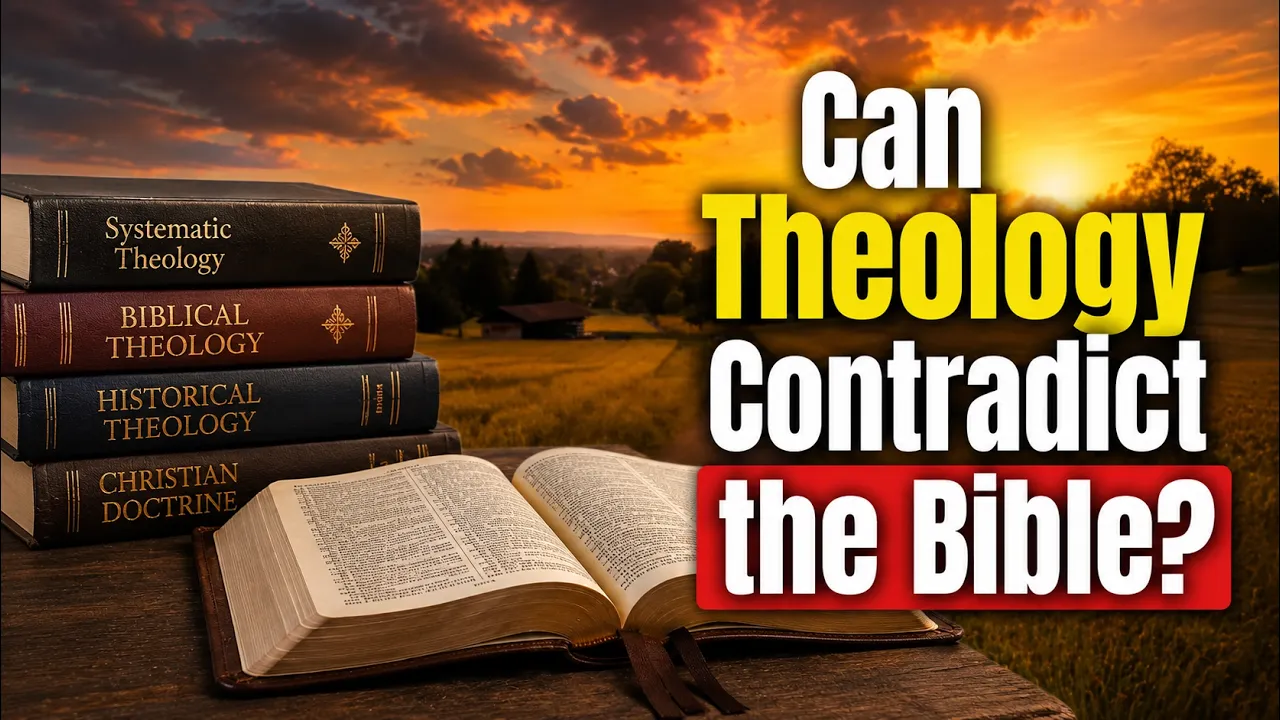
How Does Theology Differ From The Bible?

A major confusion within the Body of Christ is the inability of Christians to distinguish between the Bible’s actual content and theological explorations. Consequently, the Bible’s content is nearly always replaced by the findings of theological research. Upon closer investigation, the Bible and theology present a clear distinction, and both are intended to serve specific purposes in a divine relationship.

Here are six ways the Bible and theology differ, which can aid Christians in their spiritual journey.


Authority

The Bible is a Book that contains God’s Word for humankind. It contains doctrines that clarify the message of salvation for humanity. Theology uses these doctrines for research to further illuminate that biblical message. Theology achieves this goal by gathering evidence from the entire universe and the Bible itself. Think of the Bible as a treasure field, and theologies as the tools for extracting its various valuable resources.
Inspiration

The Holy Spirit inspired every Word in the Bible. The Bible plainly states that the Holy Spirit moved and inspired both Old Testament prophets and New Testament writers. Theology is divinely inspired by the Holy Spirit only when the theologian or researcher first submits to God, relies on the Holy Spirit’s guidance, and depends on the Bible to direct their research. Our theological research is driven by biblical passages that capture our interest and require further comprehension. For instance, to determine if the Bible is genuinely God’s Word, we can examine its historical accuracy, its compilation process, its division into chapters and verses, and its translations into other languages. This understanding bolsters our confidence, deepening our faith in God’s promises.


Authenticity

The message of the Bible is authentic, meaning it is trustworthy and true. There is no risk involved in believing and trusting the Bible’s content. Our ability to research allows us to be confident that this beautiful message was inspired by God for us. Be cautious with theology as it frequently lacks authenticity. There are diverse motivations for theological research that do not stem from a genuine desire to grasp the Bible’s message. Consequently, theological research is often tainted by bias, subjectivity, and prejudice. Unless we’re open to Scripture testing our preconceived notions, our research is unlikely to yield genuine findings.


Sufficiency

The Bible is self-sufficient, meaning it can survive on its own without any external support. The Bible can interpret itself, allowing readers to grasp its core message. Theology is an endless pursuit, particularly when scripture is manipulated for selfish aims. Theology’s potential for infinite development stems from humans’ perpetual quest for knowledge.


Consistency

The Bible’s message is remarkably consistent, from Genesis to Revelation, all leading to a singular theme. That theme is Jesus, the Messiah. The hidden message reveals God’s intention through Jesus to rescue us from sin and restore us to His fellowship. The chapters and verses of the Bible work together to fulfill this specific goal. Additionally, Satan can be seen in the background diligently working to thwart God’s plan. If a theologian’s goal isn’t to genuinely grasp God’s message in the Bible, their theological conclusions will lack logical consistency. Furthermore, these theologians delve into complex explanations, employing extensive and difficult-to-grasp terminology, which ultimately breeds confusion, division, and segregation.


Purpose

Thus far, it appears the Bible’s objective is to enable us to know God, discover His will for humanity, and do God’s Word. The message is that original sin in Adam separated us from God. Jesus offers us the chance to be freed from sin and to be brought back into relationship with God. We can regain this fellowship by believing in Jesus by faith. Theology’s role in any research is to find evidence that clarifies this biblical message.

Please relay this message to community members caught in deceptive religious patterns.

Stay Blessed In The Lord!
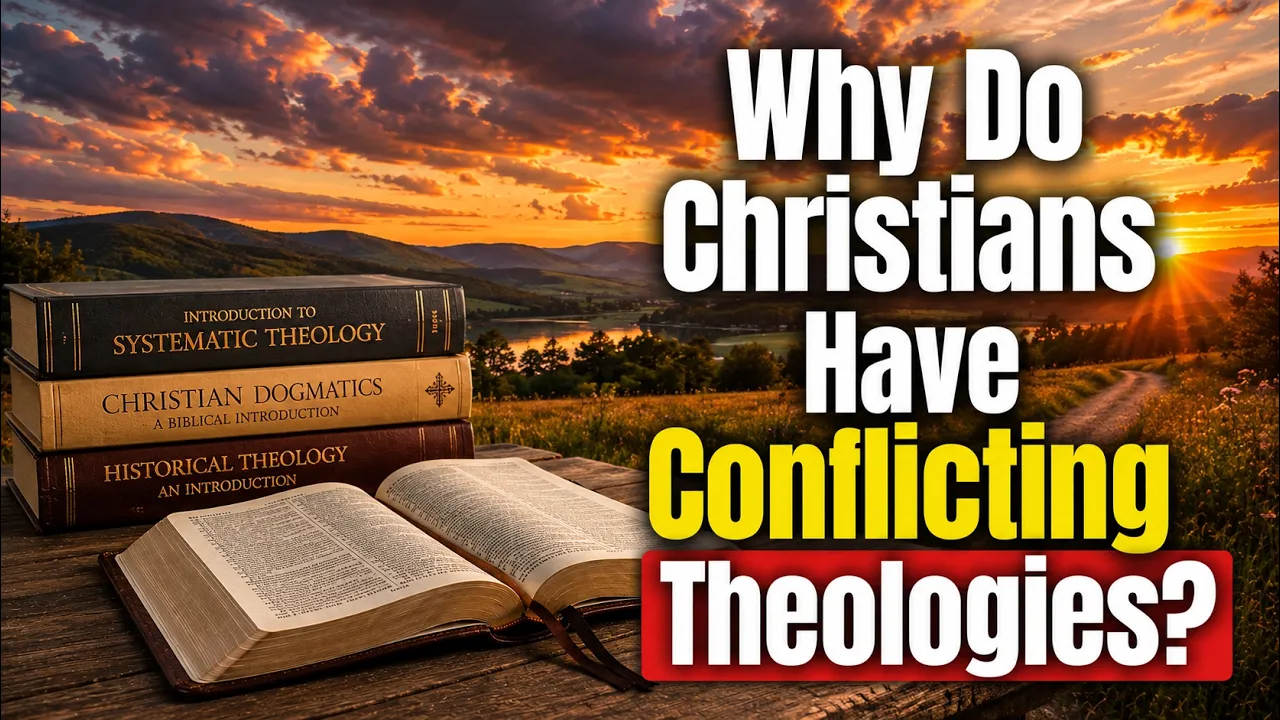
Why Do Christians Have Conflicting Theologies?

Upon careful examination of the Christian cycle, you will find multiple movements that call themselves Christian. You’ll find Christian factions broken into worldviews, denominations, cults, different schools of thought, occult beliefs, and many other groups, all of which profess to represent Jesus.


For instance, some Christian worldviews embrace free will, but others reject it entirely. Some believe in eternal separation from God in hell, while others think there is no hell, or that God will simply destroy all non-believers, a concept known as annihilation. A few Christian groups believe in universal salvation and reconciliation with God; some embrace reincarnation. One faction adheres to the Baptism of the Holy Spirit, while another rejects it. Some say miracles are a thing of the past; others believe Jesus is the same throughout time. We cannot examine every movement claiming to represent Christ in this article.


Why do two people who identify as Christians, despite reading the Bible, which is divinely inspired, reach opposing conclusions leading to arguments, confusion, and irreconcilable conflicts? Here are nine of the many reasons this occurs:


  • They substitute the Bible with their theologies. When Christians fail to grasp theology’s true meaning, purpose, and role, this occurs.


  • They prioritize theology over God’s Word. Actually, some people mistakenly believe that a theological explanation is equivalent to God’s Word in the Bible. Theologies simply provide supporting evidence to help us teach and explain the Bible’s message clearly.


  • They base their theologies on selected Scriptures. The Bible’s message, from Genesis to Revelation, is consistent, displaying a clear, harmonious progression from the Old Testament to the New. When you select Scriptures, you don’t rely on the entire Bible. Using only a fragment of scripture will lead to insufficient conclusions.

  • They develop their theologies to defend their school of thought. Your school of thought is how you build your understanding of biblical doctrines. Some schools of thought are founded on unproven assumptions. For instance, some Christian factions believe the age of miracles has ceased. Others don’t believe God can condemn individuals to eternal damnation. Their theological frameworks are constructed to uphold their existing assumptions, rather than to genuinely grasp and proclaim the true Gospel.


  • They approach the Bible with bias, subjectivity, and prejudice. For instance, some people approach the Bible with the notion that it is corrupt, incomplete, or full of errors. Some claim it was human-inspired and suggest salvation can be achieved through various paths. If you refuse to let the Scriptures challenge your traditions, lifestyle, knowledge, or prior knowledge, you risk creating theologies that resist God’s will.


  • They want to keep their human traditions. That your movement’s founder passed down certain Christian traditions through the generations does not validate them as genuine truth. Such Christian milieus prefer religiosity over genuine New Testament revelations. This is how the Pharisees and Sadducees behaved when Jesus walked the earth.


  • They don’t rely on the Holy Spirit. It is abundantly clear in the Bible that the Holy Spirit is necessary in the Christian’s life to achieve anything or do God’s will. Not all theologies originate from the Holy Spirit; some are simply human constructs. The Holy Spirit is the source of diversity, not of division. He ensures that two sincere Christians do not disagree on doctrine.


  • They don’t allow the Bible to interpret itself. The Bible can stand on its own, even without theological interpretations. A Christian will still live a wonderful life by solely reading the Bible, meditating on the Word, and acting according to its teachings. Theology adds a unique dimension by providing explanations and addressing the fundamental questions of existence with internal and external evidence.


  • They rely solely on theories, assumptions, speculations, and suggestions. These are vital for theological research, as long as the researcher is prepared to concede their position if evidence is lacking. Intellectual pride is our current challenge, spawning numerous intellectuals unwilling to abandon their unproven theories because of the prestige, societal position, or benefits they enjoy.


While many other factors contribute to theological disagreements among Christians, these provide a starting framework for deeper investigation.


Ensure this information reaches others caught in unhealthy theological patterns.


Study, research, grow in wisdom, and stay blessed in the Lord!

Can Theology Contradict The Bible?

There are two crucial points that every Child of God must consider before we address this question. They need to understand the authentic meaning of theology, and second, they must be sure that their theological tools are accurate for understanding the Bible. Without clarifying these two things, we cannot say whether or not theology contradicts the Bible.


Meaning, Purpose, and Role of Theology

Video T0001 and Article T0001 clearly define theology and explains its role and purpose for Christians. To avoid repeating information, I suggest you click the links, read the article and watch the video before proceeding. In essence, theology enriches biblical understanding by collecting evidence, classifying research, and structuring knowledge for the benefit of all Christians.


There are Many Different Types of Theologies

Theologies serve as tools for extracting spiritual resources from the Bible. The Bible offers a boundless reserve of varied resources. A particular theological framework is necessary to uncover each concealed biblical treasure. Consequently, theologies exist concerning marriage, prosperity, holiness, sanctification, evangelism, and so forth. Using theologies for evangelism to extract resources on marriage is not feasible or profitable. However, all theologies divinely inspired by the Holy Spirit align to create a unified message, with each theology drawing from its own area of expertise. We don’t use copper installations to extract iron, gold, or bauxite. Specific tools and industrial designs are necessary for extracting each resource from the earth. This is also true for the Bible’s content. The misuse of theology to extract treasures from the Bible yields incomplete truths, flawed reasoning, incorrect interpretations, and even heresy in severe instances.


Developing robust theologies that efficiently glean insights from the Bible requires that we consider interpretive tools such as context, the cultural milieu of Bible times, linguistic analysis, and the Holy Spirit’s guidance. The intention of many people is not to misinterpret the Bible. They do not deliberately want to ignore the path to discover the truth. But despite their aim to gain accurate knowledge, their ignorance leads them to accept problematic theological approaches that cause them to err. Others develop theologies to defend their schools of thought or exploit their followers.

Answer to the Question

As we can see, people approach the Bible with diverse motivations, some of which might divert them from the truth. Authentic theologies are divinely designed, receiving inspiration from the Holy Spirit and depending on Him for theological research activities. These theologies are intended to work together, not against each other, to achieve a complete scriptural harmony from beginning to end.


Consequently, theology can conflict with biblical content and create disagreements if it fails to meet the criteria or standards of genuine theology. The origin of many non-authentic theologies lies in bias, subjectivity, and prejudice.


In conclusion, ensure your theologies aim to know God, capture His will, draw from the entire Bible, incorporate both internal and external evidence, and are guided by the most complete school of thought, which is the Holy Spirit. Build your theologies on facts, not on unproven theories, selected scriptures, assumptions, intellectual garbage, and confusing terminologies.


For more information regarding this question, please refer click the video link below:

Ensure the content reaches many in your community.

Stay Blessed in the Lord!